Despite criticism that it will revisit yet more thorny tangles from Russia’s past, Parliament has passed a law to restore to religious organizations property seized by the state in Soviet times. Under the law, the federal, regional and municipal authorities have two years to hand over property after a decision is made on a claim by the church, either for rent-free use or in a full transfer of ownership. While the law addresses religious property generally, it is seen as broadly favouring the Russian Orthodox Church, the largest religious organization in the nation, though all groups had property taken by the Communists. The new law dictates that government bodies must post all property claims and decisions on Web sites. Claims can be disputed in court and legal challenges are expected. The concept of former church real estate extends not only to buildings that were used for worship, but also to church-run hospitals, schools and residential buildings. In Kaliningrad, the former German Königsberg that ended up in Soviet hands after World War II, questions of church property are especially complex. The regional legislature voted to transfer more than a dozen former Catholic and Lutheran churches, cathedrals and Teutonic castles to the Russian Orthodox Church, which says Orthodox believers there are underserved. Moscow’s relations with the Vatican had been improving, but Archbishop Paolo Pezzi, whose diocese oversees Moscow and Kaliningrad, said that the region’s legislators were “profoundly mistaken” in their effort to hand over the neo-Gothic Church of the Holy Family to the Russian Orthodox rather than the Roman Catholic Church. The church is now used by the Kaliningrad Philharmonic. The debate has reached across borders. After protests from the government of neighboring Lithuania, the Kaliningrad region is reconsidering its decision to include in the transfer list a Lutheran church that is the burial site of Kristijonas Donelaitis, a Lithuanian pastor and poet. Properties in Kaliningrad region, that handed over, by the local government, to the Russian Orthodox Church for free. 1 Church of the Holy Family http://en.wikipedia.org/wiki/Church_of_the_Holy_Family,_Kaliningrad 2 Arnau Church ( German cultural organisation paid 320000 Euro to restore that Church) http://en.wikipedia.org/wiki/Arnau_Church 3 Königin-Luise-Gedächtniskirche http://de.wikipedia.org/wiki/K%C3%B6nigin-Luise-Ged%C3%A4chtniskirche_%28Kaliningrad%29 4 Waldau Castle http://www.tacis.zamkigotyckie.org.pl/waldau-ang.htm 5 Neuhausen Castle http://www.tacis.zamkigotyckie.org.pl/neuhausen-ang.htm 6 Taplacken Castle http://www.tacis.zamkigotyckie.org.pl/talpaki-ang.htm 7 Ragnit Castle http://www.tacis.zamkigotyckie.org.pl/ragneta-ang.htm 8 Labiau Castle http://www.tacis.zamkigotyckie.org.pl/labiau-ang.htm 9 Gergdauen Castle http://www.tacis.zamkigotyckie.org.pl/gierdawy-ang.htm 10 Insterburg Castle http://www.tacis.zamkigotyckie.org.pl/wystruc-ang.htm And about 15 or so other properties.
My friends and I rallied against the transfer of cathedrals and castles to the Russian Orthodox Church. But usually we did end up in the police stations through the court procedures and fines. We signed up the petition to the president of Russia, local intelligentsia did back us up, but unfortunately local and federal authorities do not wish to hear us.
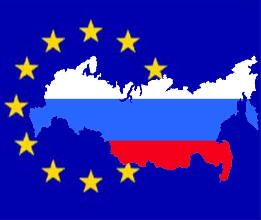
Visa lifting between the European Union (EU) and Russia is the starting point of their integration, Russian Prime Minister Vladimir Putin said in his article published Thursday in a German newspaper.
According to Putin, "the genuine partnership" between Russia and EU is impossible as long as there are obstacles for human and business contacts, that is, visa regime.
"We believe waiving visas must not be the end but the beginning of the real integration process of Russia and EU," said Putin in the article carried by Suddeutsche Zeitung.
Putin said scrapping visa regime would remove a serious obstacle for small and medium business activity and for innovative companies.
Putin stressed the importance of setting a clear timetable of visa waiver process that would enhance cooperation of the law enforcement agencies of Russia and European countries.
The Russian head of government also offered to create a free trade zone between Brussels and Moscow, removing the remaining obstacles for Russia's accession to the World Trade Organization.
"As a result, we'll get a common continental market worth trillions of euros," he said.
Putin urged to create "post-industrial" strategic alliances in shipbuilding, car industry, airplane construction, space technologies, nuclear power, logistics and others.
Putin published his article on the run-up of the 4th annual German economic forum he was going to attend.
Visa-free travel could start real Russia-EU integration” - Putin
Published by Russia Today TV, 25 November, 2010, 16:45
Moscow suggests shaping Europe’s future “through the partnership of Russia and the EU,” but true partnership is impossible “as long as barriers persist,” Russian Prime Minister Vladimir Putin has said.
German newspaper Süddeutsche Zeitung on Thursday published Putin’s article “Russia and Europe: From learning the lessons of the crisis to a new partnership agenda.” It was timed to coincide with the fourth annual economic forum for heads and top managers of leading German companies organized by the paper. The forum takes place on November 25-26 in Berlin.
Shaping the future together would be “our joint attempt at achieving success and competitiveness in the modern world,” Putin said.
“Let’s face it, both Russia and the EU have proved quite vulnerable economically, and the crisis showed that clearly. Russia still depends strongly on its raw material exports, and the European Union, after many years of de-industrialization, is facing a real threat of losing its positions on the industrial and high-tech markets. It is obvious that we are lagging behind in certain areas of education and scientific research and development.
“I should also add that in general, today's level of interaction between Russia and the EU is definitely not up to the challenges we are facing.”
Common economic policy
“Changing this situation requires using the tangible advantages and opportunities that both Russia and the EU have,” Putin said. “That would be a truly harmonious synergy of two economies: the classic, well-established economy of the EU and the emerging, developing economy of Russia, with growth factors that complement each other.
“First, we need to establish a harmonious community of economies stretching all the way from Lisbon to Vladivostok. In the future, we may establish a free trade area or even a more advanced form of economic integration. That would essentially result in a common continental market with a capacity measured in trillions of euros.
“Naturally, that would require removing all obstacles in the way of Russia's accession to the WTO first. Then we would need to standardize our legislation and customs procedures, as well as technical norms and regulations, and eliminate existing bottlenecks in the pan-European transport infrastructure.
“Second, we need a common industrial policy based on the combination of the technology and resource potentials of Russia and the EU. Also, we need joint programs to support small and medium-sized businesses working in the real sector.
“Third, there is an urgent need to set up a common European energy complex.
“Over the past few years, the subject of Russia-EU energy interaction attracted much attention and, frankly speaking, was too politicized. Russia was even accused of plotting to use its oil and gas deliveries to achieve its political goals. That, of course, had nothing to do with reality.
“The truth is that the collapse of the Soviet Union deprived Russia of direct access to major export markets. We now face the problem of transit countries, which seek to use their monopoly position to achieve unilateral advantages. That was the cause of our recent conflicts.
“Naturally, this situation ran counter to Russia’s national interests and, actually, those of the countries which consume our energy resources. That is why Europe’s leading energy companies and the governments of many European countries, including Germany, have supported Russia’s plans to build pipelines under the Baltic (Nord Stream) and the Black Sea (South Stream)”.
Supporting science and education
“Fourth, without a developed industry, European science and education cannot develop,” the prime minister’s article reads.
“Today, both in the European Union and Russia, fewer and fewer gifted young people seek to get technical education. They see no future for themselves as engineers or skilled workers. They choose other occupations which often require lower qualifications. That is why it may not only be manufacturing plants that move from our continent elsewhere; design bureaus and engineering companies may do the same.
“European science and education should secure leading positions. And again, the only way for us to achieve that is to develop close partnership.
“Russia will continue investing in pan-European science projects such as the construction of a roentgen laser in Hamburg or the Darmstadt accelerator.
“We are ready to open Russian universities and science centers for EU researchers and even to offer grant programs. Furthermore, Russia offers an excellent opportunity to work on unique experimental equipment.”
Removing barriers
“Fifth, a true partnership is impossible on this continent as long as barriers persist that hinder personal and business contacts,” Putin said.
“The main one of these is the visa regime between Russia and the EU. We think that allowing visa-free travel would be the beginning, rather than the completion, of real Russia-EU integration.
“Young people, schoolchildren and college students, will be the first to benefit from the freedom of movement. They will enjoy new opportunities to travel, to get education, and to see the unique cultures of different countries.
“By abolishing visas, we will also remove a serious obstacle to extending business activities. Currently, visas do not create problems for big business but they have quite an impact on small and medium-size businesses and on innovation companies. In effect, the visa system is artificially perpetuating the existing structure of our economic ties, which is far from perfect.
“Finally, establishing timeframes and a clear timetable for the abolition of visas will make it possible to intensify cooperation between the law enforcement agencies of our countries. It will help us join our efforts and more effectively fight against illegal migration, drug trafficking, organized crime and terrorism.
“Let me stress the following. Russia has no interest whatsoever in a weak or divided European Union because that would indirectly diminish Russia’s own international influence as well. Our opportunity to rely on a partner with similar and often directly concurring interests would shrink. Closer ties between Russia and the EU cannot be directed against any other party. Neither does it require the weakening of ties with our traditional partners and allies.”
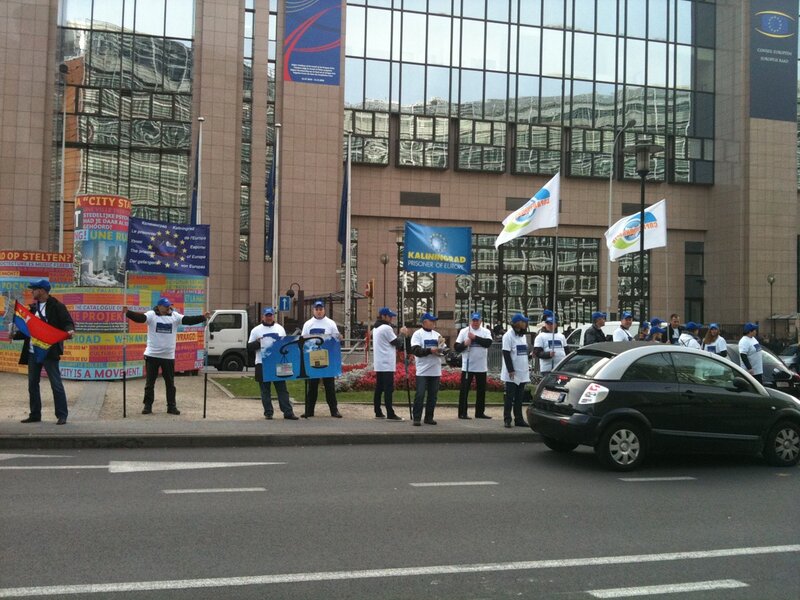
At this moment in Brussels Kalningradians picketing European Parliament and European Commission in Brussels in the frame of campaign "Kaliningrad - Prisoner of Europe". 31 participants of the picketing, in particular, the publisher of the newspaper "Dvornik" Arseny Mahlov, the leaders of NGO "Spravedlivost" Konstantin Doroshok and Vitaly Lavrinovic, local MP from Chernyakhovsk Vera Safonova, head of the independent non-profit organization "New World" Alexander Shatsky and other activists from Kaliningrad region. Arseny Mahlov passes from the scene.
15-06: We start picketing European Parliament and European Commission. 15-10: The Europeans are interested, waiting for the police to come . 15-35: No police and we still picketing without police permission..Attention is big, especially when NATO generals are passed by.Our girls rushed to give them a leaflet about the Kaliningrad region, but the policeman stopped the unauthorized distribution, despite the fact that NATO generals willing to take! Journalists and officials European Commission joined to us. 15-37: Police commissioners arrived. 15-46: Police allowed us to move to the entrance to the European Commission with the distribution of leaflets. 16-00: Konstantin Doroshok went to Jose Manuel Barroso to hand over 4,500 signatures of Kaliningradians. 16-17: Signature handed over to personal assistant of Mr. Barroso.Our proposals for issuing multiple-entry visas will be considered at the next meeting of the International Affairs Commission and Mr. Barroso will send a reply. 16-23: Lars Gronbjerg( an expert on relations with Russia) came to us.We made a suggestions on multiple visas.He expects an official document from the public in Kaliningrad with specific actions on facilitation of visa regime. 16-32: Commissioner Cecilia Malmström will be directly in charge of Kaliningrad.The protesters chanting: "We'll be back!"
16-48: Due to expected arriving any minute now of the Queen of Belgium to the building of the European Commission, followed an urgent request from the police to finish our picketing.
After the rally, I received a message from Brussels: "The picket was a success, Kostya handed signatures to the European Commission. We're going back with victory. Lvovich" P.S. I`m sending picketers to the Brussels.
On October 11 from 13 till 14 was a picketing of the Latvian consulate in Kaliningrad. I`m an organazer, Vitaly Lavrinovich from NGO "Spravedlivost" the manager of picketing. The purpose of the picketing - a request to the institutions of the European authorities for the simplification of visa regime for residents of Kaliningrad region. There were 25 participants of the picketing. The picketing was civil, participated in the picketing residents of the Kaliningrad region.We gathered signatures from passers-by. The picket was supported by the activists of political parties and public organizations. In particular - "the Baltic Republican Party", party "Patriots of Russia," party "Yabloko", NGO "Spravedlivost", NGO "Nash Gorod" and the NGO "New World ". Our posters were - "Europe is our common home", "Kaliningrad - Prisoner of Europe." The picketing was peaceful, without shouting slogans towards the consulate. We do not interfere with the work of the Latvian Consulate, our picketing located across the street on the sidewalk. We did not protest against Latvians. We used consulate as one of the structure of the European authority. We see Latvians and other Europeans as our friends and neighbours. After the picketing I handed over to the Head of Chancery of Latvian Consulate Mrs Dzidra LIEPINAa petition with copies of the signatures of 550 residents of the Kaliningrad region. The rest 2000 original signatures sent by post to the President of European Commission Mr. Jose Manuel Barroso. The fourth and final, picketing will be held on October 18 from 13 till 14 of local time near the Consulate of Germany, in Kaliningrad, Leningradskaya street 4. My phone 8 909 7755 395 Will accept any assistance in organizing pickets. Our petition in Russian and English you could download here. http://www.2shared.com/document/bBxYfYCH/kaliningrad_prisoner_of_europe.html
On October 4 from 13 till 14 was a picketing of the Polish consulate in Kaliningrad. I`m an organazer, Vitaly Lavrinovich from NGO "Spravedlivost"manager of picketing. The purpose of the picket - a request to the institutions of the European authorities for the simplification of visa regime for residents of Kaliningrad region. There were 20 participants of the picketing. The picket was civil, participated in the picket residents of the Kaliningrad region. We gathered signatures from passers-by. The picket was supported by the activists of political parties and public organizations. In particular - the Baltic Republican Party, "Party of Patriots of Russia," NGO "Spravedlivost", the United Democratic Movement" Solidarity "and the NGO "New World ". There were journalists from "Reuters" , newspaper "Kaliningradskaya pravda", a cable TV channel "Pervi gorodskoi", etc. Our posters were - "Europe is our common home", "Kaliningrad - Prisoner of Europe."
The picketing was peaceful, without shouting slogans towards the consulate. We do not interfere with the work of the Polish Consulate, our picketing located across the street on the sidewalk.During the picketing, the Polish consulate has been closed down and they stopped issuing visas for Kaliningraders. About 30 persons was helplessly trying to get a Polish visa, but they see just a closed gates of Polish consulate.
The staff of the Polish consulate did not accepted our petition with signatures of Kaliningradians. I consider it as an indicator, what actually the real attitude towards to Kaliningraders, behind mask of empty words and smiles of the European diplomats. Can they do that towards Americans or British? I doubt it. Remind you my dear readers, that the Lithuanian Consulate does not stopped working during our picketing on 27 October. As the organizer of the picketing I did apologize to Kaliningraders for the inconvenience.
On October 4 we are picketing Polish Consulate in Kaliningrad from 13 till 14, Kashtanovaya Alley 51. I'm an organizer, Vitaly Lavrinovic from NGO "Spravedlivost" managing the picketing. The purpose of picketing - to achieve simplification of visa regime for residents of Kaliningrad region. On picketing we will gather signatures. More then 500 copies of signatures with the petition will be passed to Polish consul, this is the part of 2000 original signatures that we did post to the President of European Commission . Our slogans - "We're not prisoners, we are not hostages!", "Europe is our common home!", "Kaliningrad the prisoner of Europe!" We invite all parties and organizations to join us on picketing. We are planning that the picketing will attend more than 30 people. This is our second picketing, first picketing near Lithuanian Consulate gathered more than 20 people.
On 27 of September was a picketing near Lithuanian consulate. We are picketed for easing of visa regime for residents of Kaliningrad region by EU. I was an organizer of it. We were not lucky with the weather, the whole day was a pouring rain. But we Kaliningraders kinda like rain, it`s the usual weather for our region. There were about 20 persons. The picketing was attended by activists of the Baltic Republican Party, NGO "Spravedlivost," NGO "New World" and the Russian People's Democratic Union. We did not protest against Lithuanians. We used consulate as one of the structure of the European authority. We see Lithuanians and other Europeans as our friends and neighbours. Our slogans on picketing were: "Kaliningrad - prisoner of Europe", "Europe is our common home", "We are not hostages, we are not prisoners" On the picketing we gathered signatures of residents of the Kaliningrad region.After the picketing I handed over to the Lithuanian consulate a petition with copies of the signatures of 500 residents of the Kaliningrad region. Petition http://kaliningrad-eu.blogspot.com/2010/07/kaliningraders-appeal-to-eu.html Part of the signatures. https://www.blogger.com/comment.g?blogID=319437721957422824&postID=4486031358823685079&isPopup=true The rest 2000 original signatures sent by post to the President of European Commission Mr. Jose Manuel Barroso.
Part of our signatures for facilitation of visa regime for Kaliningrad residents. We put them in form of our region. For today we have got about 1700 signatures.
Official letter from Baltic Republican Party. For Marko Mihkelson, chairman of the Estonian parliament's committee for European affairs, Kersti Luha Press Spokesperson for Estonian Ministry of Foreign Affairs, for Estonian Ministry of Foreign Affairs, Lithuanian authorities and others. The Baltic Republican Party concerned, that some authorities in Baltic States using our region in their political games. We are in Königsberg not your hostages and never will be. Dear Estonian friends could you please deal with Kremlin about your disputed bordering territories directly by your own powers and not by our lives. We are not your prisoners. As we see from our side, your words and actions directed on dividing Europe. You are forgetting for what Europe stands for. Democracy and human rights for you just a tools in your game of double standards. Personally for Kersti Luha according to that http://www.epl.ee/artikkel/583121 . As a Press Spokesperson for Estonian Ministry of Foreign Affairs you should know visa policy for EU. About 40 of non EU countries have got visa-free access to the EU including countries like Argentina, Brazil, El Salvador, etc. For your better understanding of EU policies I show you a picture. Green - countries with visa-free access to the EU. I`m not sure if you Kersti Luha personally and Estonian Ministry of Foreign Affairs coping with control of movements of such masses, but I`m sure that you can control one million people from Königsberg region which based within EU. Otherwise your policies are useless. Personally for Marko Mihkelson, according to that http://www.epl.ee/artikkel/583117. As a chairman of the Estonian parliament's committee for European affairs , you should know that Leningrad and Pskov regions of Russia (in contrast to our region) have a Schengen visa privileges. They may apply for a multiple visa to Finland by a simplified scheme. Documents substantiating the purpose of the trip (the invitation, hotel reservation, etc.) are not required. Dear European neighbours, could you please think twice before putting your words about our region. Kremlin is not your neighbour, but one million of us are. Here in Königsberg, we have got mostly pro-European views and our common home - Europe.
German Chancellor Angela Merkel said visa-free travel for the residents of Russia’s Kaliningrad region could be possible.
The European Union is actively discussing this issue, and things can start moving in the positive direction, Merkel said in Lithuania, where she is on an official visit.
However some regulations have to be changed first and some legal norms amended under the Schengen Agreement, she said on Monday, September 6.
Merkel said she had discussed visa-free travel with Russian President Dmitry Medvedev and she did not consider it unreal, but believes that the partners will have to “travel a long way”.
Long live Angela Merkel! She is a woman of the year in Koenigsberg.
Baltic Republican party banned by Kremlin. Russia once again became totalitarian and it is a grim near future for the Russia. Even here in centre of Europe in Konigsberg situation more and more goes down the hill towards totalitarian system. No free elections, no free political parties, no free newspapers, radios, TV stations, no free market and competition everything controlled by the state. Kremlin system making inhuman "laws" to give FSB, police unlimited powers, even now they have got uncontrolled powers. From you Seth and other foreigners I often hear suggestion. "You could make an other party.. with a different name or something and they couldn't ban your new party". You have got the point, but your words good only in open democratic state, not in Russia. You see, there is a new "law" about the Parties in Russia. The key legislation governing the formation and registration of political parties in Russia is the federal law “On Political Parties,” which came into effect on July 14, 2001. The original document stated that an organization that consistently takes part in elections, has a membership of at least 10,000 and branches in at least 50 regions, with each branch having a membership of at least 100, was considered to be a party. An updated version of the law "On Political Parties & Movements" which came into force at the beginning of January 2006, requires each political party to have a minimum of 50,000 members and more than 45 regional branches with a minimum membership of 500 each. We`d better stay as banned local Baltic Republican Party, ( that is more recognizible) then try uselessly to become a federal Party. We are regional Party and we do not wish to have branches in Moscow, Chechnya or Chukotka. This is ridiculous. P.S From now on I`m on the "Facebook" too. You could find me and add by my name and surname - Rustam Vasiliev.
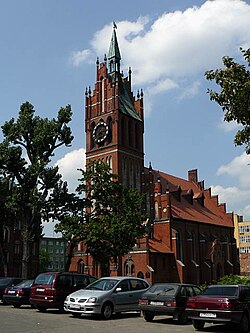 Despite criticism that it will revisit yet more thorny tangles from Russia’s past, Parliament has passed a law to restore to religious organizations property seized by the state in Soviet times.
 Moscow’s relations with the Vatican had been improving, but Archbishop Paolo Pezzi, whose diocese oversees Moscow and Kaliningrad, said that the region’s legislators were “profoundly mistaken” in their effort to hand over the neo-Gothic Church of the Holy Family to the Russian Orthodox rather than the Roman Catholic Church. The church is now used by the Kaliningrad Philharmonic.
 My friends and I rallied against the transfer of cathedrals and castles to the Russian Orthodox Church. But usually we did end up in the police stations through the court procedures and fines. We signed up the petition to the president of Russia, local intelligentsia did back us up, but unfortunately local and federal authorities do not wish to hear us.